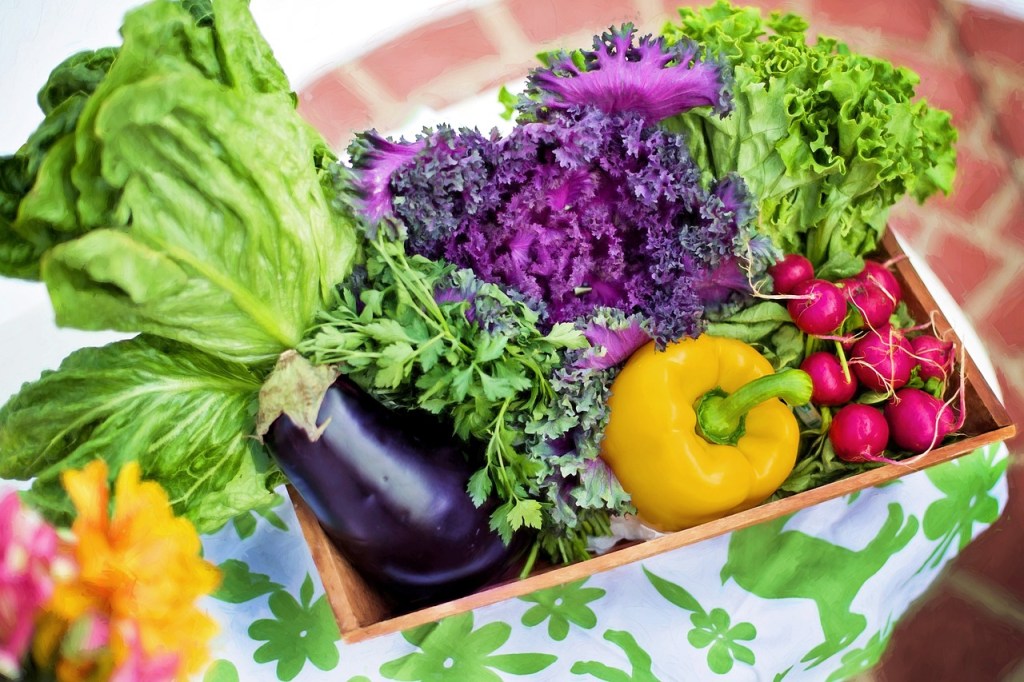
Have you ever wanted to know how to start a vegetable garden in your backyard?
Think about it. You could literally reap the delectable rewards of some enjoyable labor.
If you need a good reason to start your garden, consider some basic yet compelling reasons.
You’ve surveyed the colors, shapes, and aromas of the vegetables at the local farmer’s market and imagined what it’s like to have veggies growing in your backyard.
Let’s consider a couple of great reasons to opt in to growing your own veggies.
Maybe you’re tired of paying high prices at the supermarket for subpar produce with no flavor, or you may want control over the quality of the food you eat and share with loved ones.
With this guide, it’s easy to grow a vegetable garden at home.
Ready to learn how? Let’s dig in.
X Marks the Spot: Choosing a Location for Your Garden
Pointing to a corner of the yard isn’t the best way to choose a location. Several things must be considered.
Vegetable plants love lots of direct sunlight, so your garden space that offers at least 6 hours of direct sun daily.
Plants also require plenty of water. Rainy days are helpful, but new plants need frequent watering. Being close to a water source that reaches the garden easily makes it easier to maintain a watering schedule.
Plants need air to flow around them as they grow, so allot enough space to prevent crowding especially if you have raised beds or do container gardening.
Drainage matters, so don’t choose low-lying areas where water collects and stands. Plant roots will rot if water can’t drain away from them.
Almanac.com recommends protecting plants from weather conditions. Wind damages vulnerable young plants as well as more established crops. Locate your garden with nearby trees and structures as helpful windbreaks.
Do not dig until you’ve called the various utilities to ensure you won’t damage underground lines or get injured.
Decisions, Decisions: Choose the Ideal Plants for Your Garden
Finding the overarching purpose for having a garden helps you decide which vegetables to grow.
If you want to take fresh vegetables from garden-to-table, try the classics – lettuce, tomatoes, peppers, and cucumbers make a colorful and tasty salad.
To save money in the produce aisle, lettuce, kale, and broccoli are candidates.
Sow seeds like peas, radishes, beans, and lettuce in your beginner garden if you want veggies as toxin-free and natural as possible.
Keep It Simple
For your first planting season, simple is best. Seeing your successful crops come to fruition feels encouraging and leads to better results in future seasons.
Try these easy-peasy veggie plants:
- Lettuce – many varieties to choose from
- Snap beans – a hardy version of green beans
- Peas – choose a variety for early planting
- Radishes – quick-growing and provide early-season success
- Carrots – a root vegetable that produces beautiful fern-like fronds above ground
- Kale – this good-for-you veggie grows bountifully in different soil types and growing zones
- Herbs like garlic, basil, and chives are easy to grow and are good companion plants
Other important considerations for plant selection include:
- Size of the garden space – spreading vines may not fit in smaller spaces, e.g., cukes and zucchini
- Amount of direct sunlight – if the space is in the shade part of the day, sun-loving crops won’t grow as well
- Soil type – although amending the soil gets good results, choose what works best with your native soil
Do the research upfront so you can make the best choices for your garden.
More than One Way: Using Seeds or Starter Plants
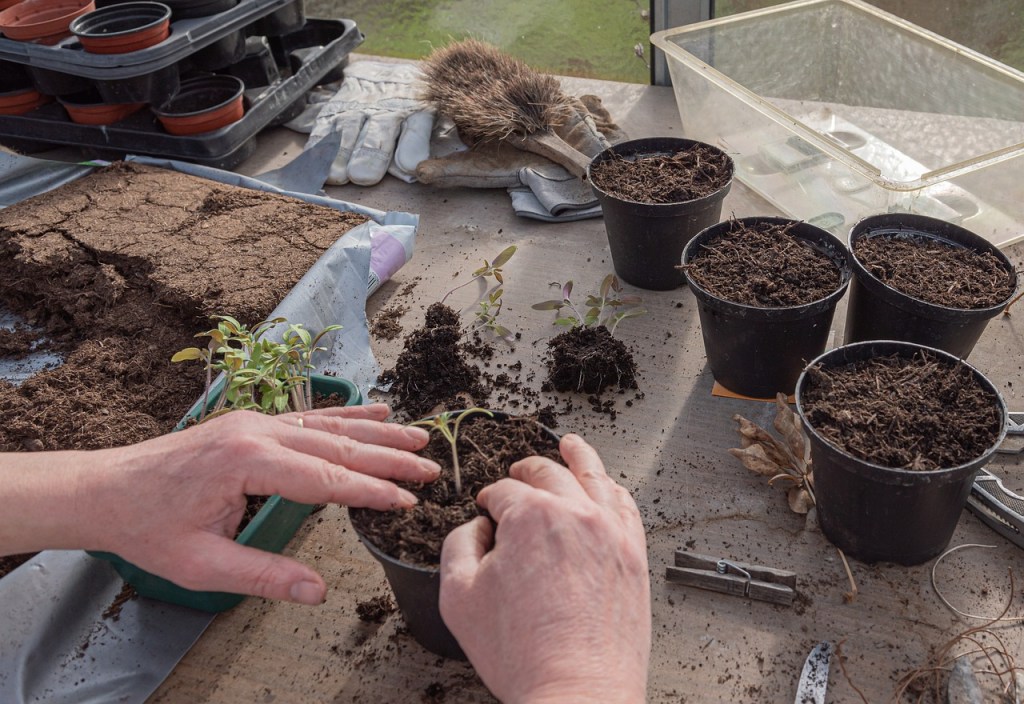
For beginners, starter plants are easier than sowing seeds. Seedlings already have established roots and the plant.
Seedlings cost more money, though, so if you’re on a budget, seeding crops is affordable.
Consider other variables:
- How long does the plant take to mature? Quicker maturing plants grow well from seed. Slower developing plants grow better from seedlings.
- What size is the plant? Smaller plants can come up from seeds, and bigger plants do well from seedlings.
- How fragile are the roots? Fine, delicate root systems grow best from seeds. A sturdier root system transplants well.
If you decide to use seeds, be sure to source them from a reputable dealer. If purchasing seedlings, find a good local nursery.
Choose starter plants or seeds that are non-GMO for best results.
Seeds should be fresh – the more recently packaged, the better. Look for seedlings with healthy leaves that are not root bound in their pots.
The Best Laid Plans: Designing Your Vegetable Garden
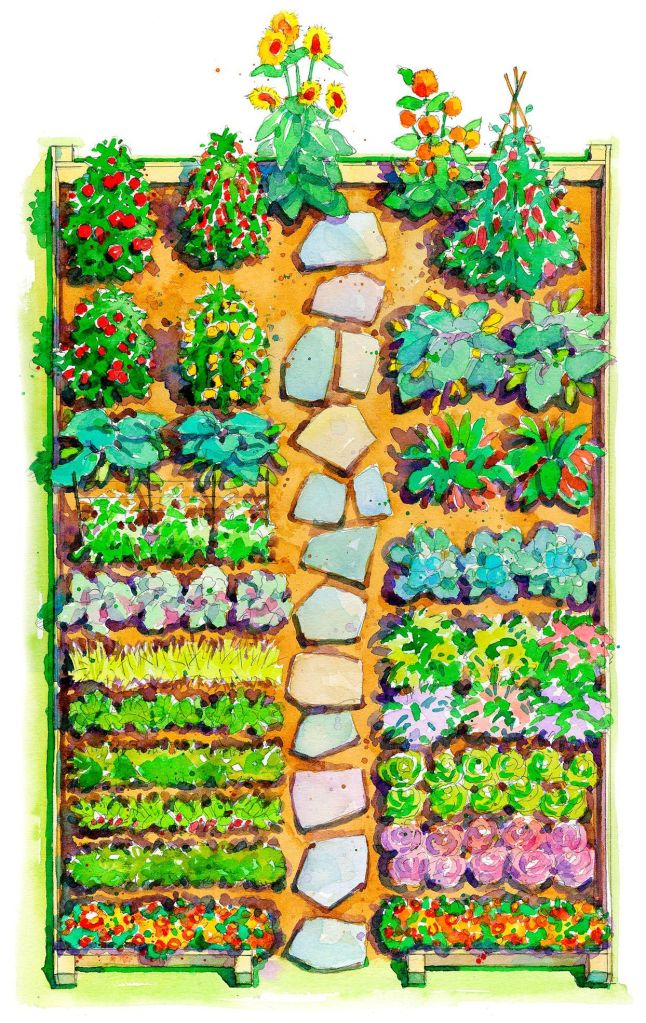
It’s a good idea to investigate the myriad of garden layouts and sketch your design on paper or screen before you turn a spade.
Pull back for a holistic view of the selected space. While you may be drawn to aesthetics, give practical needs greater weight.
Are you working in a larger in-ground space where you can incorporate pathways between rows or groups of plants? You need to be able to reach your plants for maintenance and harvest.
Did you decide to use raised beds? Determine whether planting in rows or groupings will give you the best use of space.
Garden spaces can take different shapes and sizes. Container gardening, kitchen gardens, and circle gardens are options depending on available time for maintenance, proximity to the house, water sources, and other activities that occur in the yard.
Child and pet safety may be a concern. If kids are curious, supervise their garden time. Create a space for them to have fun in another corner of the backyard as a diversion.
For four-legged kids, the Canine Journal recommends fences and deterrents to keep them out of harm’s way and from damaging plants. Avoid planting toxic plants and using mulch or compost that could pose a risk if eaten.
After you answer these basic questions, your garden design will come into focus.
Biology 101: Prepare the Soil
It’s true. You have to get a little dirty to get a good yield from your garden.
The secret is in the soil.
If soil is prepared properly, it handles water better, leading to the best hydration for plants.
Vegetable gardens like organic matter in the soil. Adding compost or manure to the existing soil boosts fertility and nutrients for plants.
You may need to amend your soil if it is too loamy or has lots of clay.
But how do you know what’s in your native soil? Soil testing is the answer.
You can have your soil tested professionally or do it yourself.
If you want it done by a pro, contact the cooperative extension office at a local university. They will instruct you on how to collect the sample for testing.
If you’re a DIY type, you can purchase a kit from a store like Lowe’s or Home Depot. Follow the instructions for testing.
The Old Farmer’s Almanac website also provides detailed instructions for testing soil to see if it’s sandy, silty, or clay-like. Detect acidity or alkalinity. Try their “earthworm test” to determine soil health.
Knowing the exact composition informs the type of amending needed.
Ready, Set, Go: Plant Your Vegetables
Finally, it’s time to plant! Grab your garden gloves and trowel.
Timing, technique, and crop type all must be considered.
You may already have an idea of when to plant based on your plant choices, but double-check to be sure.
Plants that can withstand cooler temperatures are planted first. Sow seeds during this time of year. Early plants include cabbage, kale, broccoli, cauliflower, onions, leeks, and lettuce.
The next planting is typically a few weeks later for radishes, peas, carrots, spinach, and arugula.
After the threat of frost has passed, plant seedlings for peppers, tomatoes, squash, and cucumbers.
Follow the seed packet instructions or the plant tag for depth and spacing along with any thinning of sprouts as they emerge.
Water the seeds or plants immediately after planting and continue to water daily so seeds will sprout and transplants will establish a stronger root system.
Hang in There: Maintain Your Garden
You’ve done much work to get this far, so don’t drop the ball. It’s time for vigilant care of the garden.
Watering
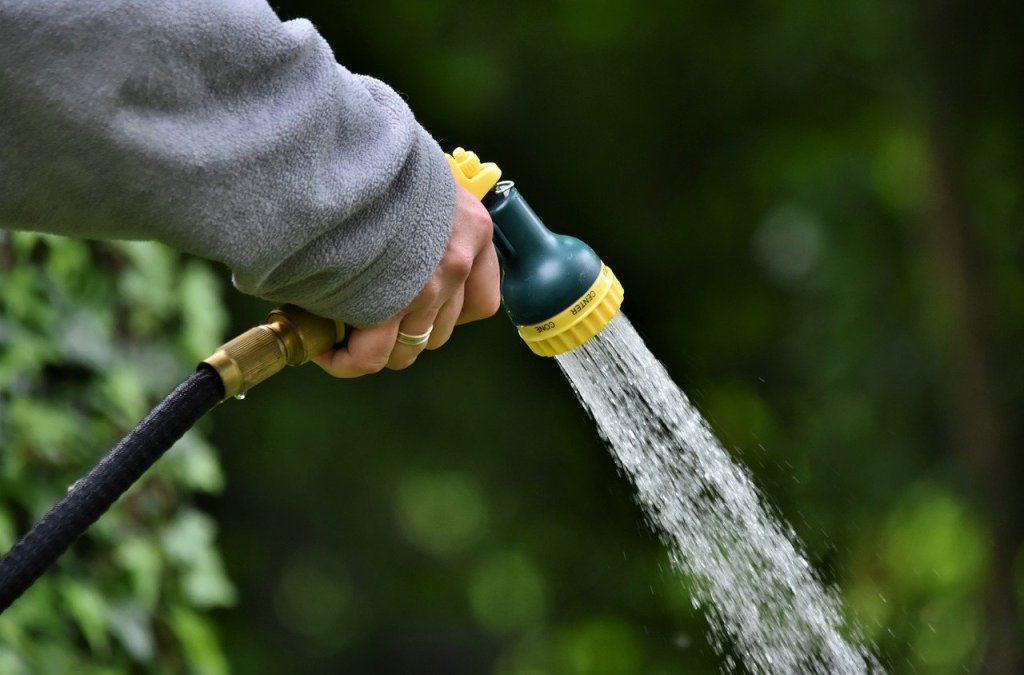
The rule of thumb is plants need approximately 1-2 inches of water each week – more in hot weather.
Use the garden hose, or if you want some convenience, set up a soaker hose that lets you turn on the water and walk away. Use a timer to prevent over-watering.
Weeding
The sooner you pull new weeds, the better. If they develop a root system, they are harder to eradicate, but when just emerging, it’s easy to get them roots and all. If you mulched, weeding tasks may be significantly fewer.
If you think an herbicide is necessary, research the available types to ensure compatibility with your plants and your gardening goals.
Some herbicides are especially toxic to the environment and may be poisonous to pets.
Fertilizer
Not all fertilizers are equal.
Depending on the plants and the soil content, select a fertilizer that will add necessary nutrients to your soil.
Get advice from a local nursery or extension service if you’re uncertain. When in doubt, use an all-purpose fertilizer for vegetables.
Granular fertilizer is sprinkled mid-row between plants. Insert convenient fertilizer spikes in the ground near the plants following the package directions.
Pest Control
It’s inescapable. Nature has bugs and critters that look for food sources in your garden.
Remove certain pests with a strong dowsing of water. Pick others off the plant. Insect traps work for some pests.
More often, use a pesticide – either a commercial product or something natural like neem oil depending on your preference.
After you identify the pest, use the appropriate method and keep a watchful eye to make sure the pests are gone. Repeat if needed.
The Latest Craze: Use Technology for Easier Gardening
Do you like to use technology?
Apps are available for every phase of vegetable gardening. From design to plant selection to tracking, there’s an app for that.
From Seed to Spoon offers everything you need to start a vegetable garden from scratch.
The app helps you plan based on your growing zone including planting date recommendations, plant photo identification, tracking and reminders for watering and fertilizing, and expected harvest dates.
Find videos and advice for concerns like pest control. Plant benefits and recipes are also available.
From Seed to Spoon is only one of many apps you’ll find in your device’s app store. Make sure you choose apps that are up-to-date and start using them from the get-go.
Feast Your Senses and Enjoy the Repast
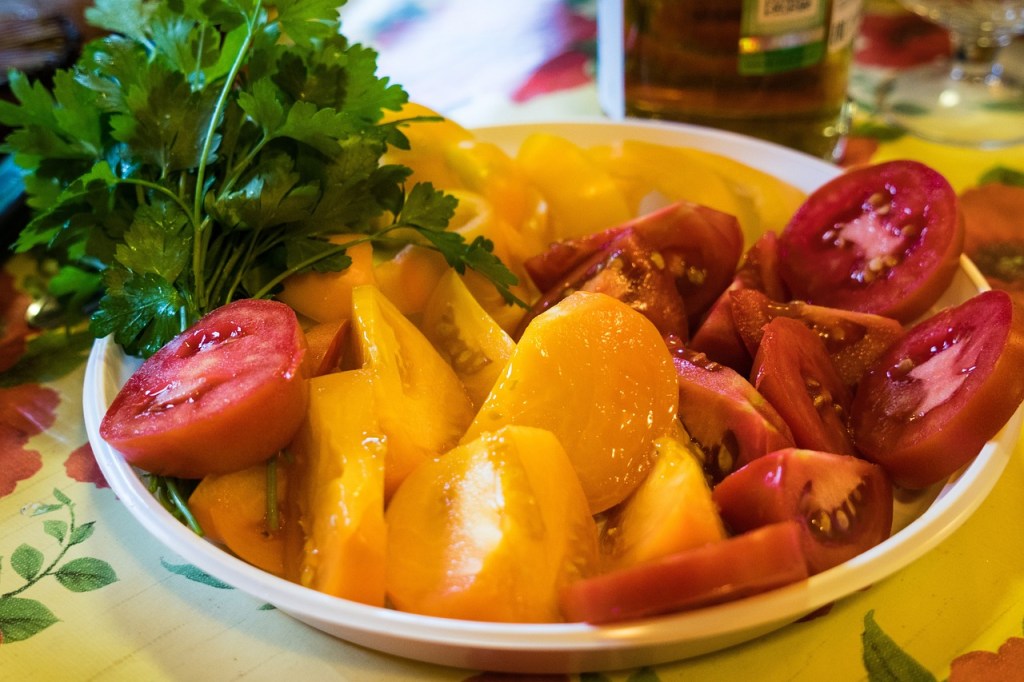
Growing a vegetable garden is a productive and gratifying pastime.
Imagine eating a plump, sun-warmed tomato fresh from the vine.
Salads at your dinner table are crisp, colorful, and nutrient-packed.
Plan according to your tastes and lifestyle. Take it a step at a time. Enjoy the process.
Before long, you’ll be the one dispensing gardening advice to neighbors and friends.
Go ahead. Sow some seeds. Plant some plants and watch them grow.
Now that you know how to grow a vegetable garden, harvest your bounty and enjoy!
 Sherri DeRhodes - Freelance Writer